Peptide Therapy: What Researchers Need to Know About the Field's Fastest-Growing Category
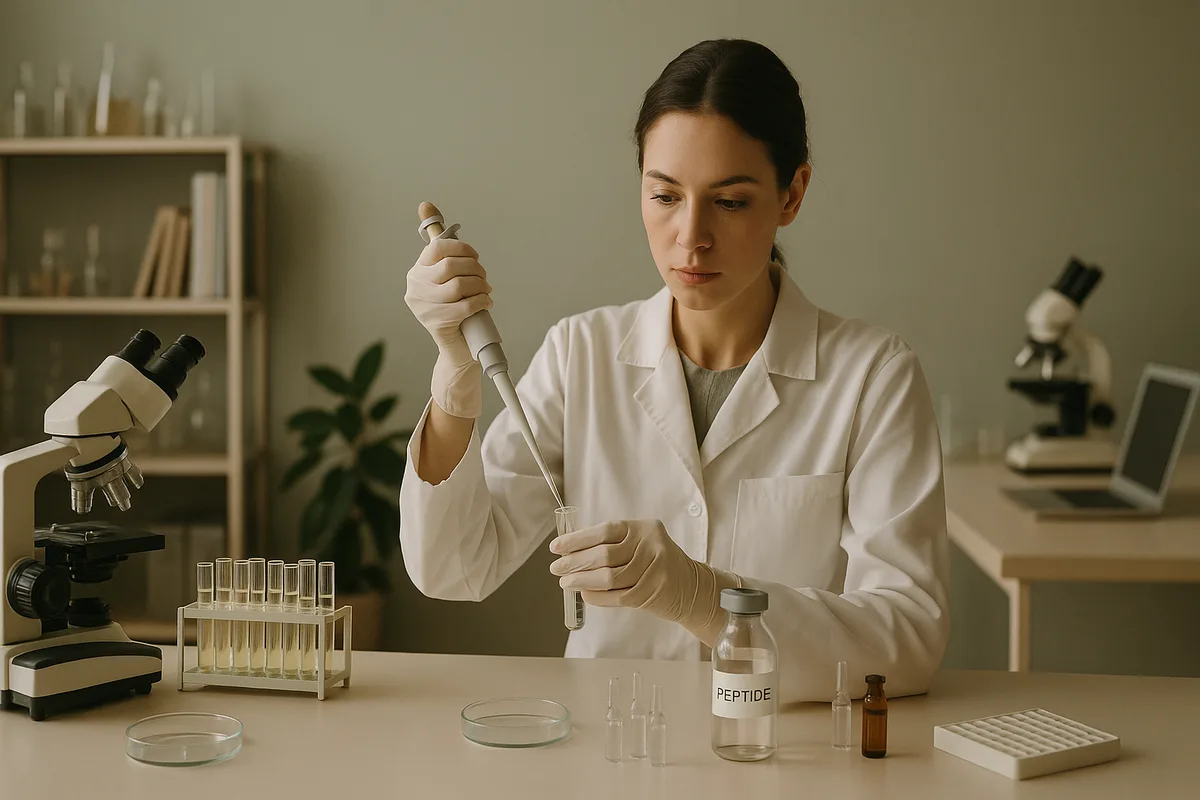
The word "therapy" implies treatment. In the context of peptides, that framing has become both a marketing tool and a source of genuine scientific interest. Peptide therapy, broadly defined, refers to the administration of short-chain amino acid sequences to modulate specific biological processes. Some of these sequences are FDA-approved pharmaceuticals. Most are not. The distinction is important, and the space between those two categories is where the most active research is happening.
Peptides Are Not New
The first therapeutic peptide, insulin, entered clinical use in 1922. Oxytocin was synthesized in 1953. By the 1980s, peptide drug development was a recognized field within pharmacology. What has changed in the last decade is scope. Advances in solid-phase peptide synthesis have made it possible to produce complex sequences at scale, and the research community has responded by investigating hundreds of novel peptides across nearly every physiological system.
As of 2024, the FDA has approved more than 80 peptide-based drugs. The global peptide therapeutics market was valued at approximately $42 billion and is projected to exceed $65 billion by 2028 (Grand View Research, 2023). This is not a fringe category. It is one of the fastest-growing segments in pharmaceutical development.
How Peptides Work
Peptides are chains of amino acids, typically between 2 and 50 residues in length. Anything longer is generally classified as a protein. Their small size allows them to interact with cellular receptors with high specificity, often mimicking or modulating the body's endogenous signaling molecules.
The mechanisms vary by peptide. Some act as receptor agonists, binding to and activating specific receptors. GLP-1 receptor agonists like semaglutide and tirzepatide work this way, stimulating insulin secretion and suppressing appetite through the same pathways as the body's own GLP-1. Others function as enzyme inhibitors, signaling modulators, or direct structural agents in tissue repair.
What makes peptides attractive as research subjects is their selectivity. Small molecule drugs often affect multiple systems because their binding profiles are broad. Peptides tend to be more targeted, interacting with specific receptor subtypes. This precision comes with trade-offs. Most peptides have poor oral bioavailability because they are degraded in the GI tract. They often require refrigeration. Their half-lives can be measured in minutes rather than hours.
Categories of Peptide Research
The research peptide field can be roughly organized by target system:
Metabolic and body composition. This is where the most public attention has concentrated, driven largely by GLP-1 agonists. Beyond the approved pharmaceuticals, research peptides like AOD-9604 (a fragment of human growth hormone) and MOTS-c (a mitochondrial-derived peptide) are being studied for their effects on fat metabolism and energy regulation.
Tissue repair and recovery. BPC-157 and TB-500 (Thymosin Beta-4) are the two most studied compounds in this category. BPC-157 has over 300 published papers examining its effects on tendon, ligament, muscle, gut, and neurological tissue in animal models. TB-500 research focuses on wound healing, cardiac tissue repair, and anti-inflammatory mechanisms.
Growth hormone secretion. Peptides like CJC-1295, Ipamorelin, and Tesamorelin stimulate growth hormone release through different mechanisms. CJC-1295 acts as a growth hormone-releasing hormone (GHRH) analog, while Ipamorelin is a selective growth hormone secretagogue that targets the ghrelin receptor without significantly affecting cortisol or prolactin levels.
Neuroprotection and cognition. Selank and Semax, both developed at the Institute of Molecular Genetics of the Russian Academy of Sciences, have been studied for anxiolytic and nootropic properties. Dihexa, a peptide derived from angiotensin IV, has shown dramatic effects on cognitive function in animal models of neurodegeneration, though human data is absent.
Skin and cosmetic applications. GHK-Cu (copper peptide) has a substantial research base in wound healing and skin remodeling. Topical formulations have been studied for their effects on collagen synthesis, elastin production, and antioxidant enzyme activity.
Immune modulation. Thymosin Alpha-1, one of the few research peptides with approved pharmaceutical status in some countries, has been studied for its effects on T-cell maturation and immune response. BPC-157 also shows immunomodulatory properties in preclinical models.
The Regulatory field
This is where clarity matters most. Peptides exist across a spectrum of regulatory status:
FDA-approved peptide drugs (semaglutide, tirzepatide, octreotide, etc.) are prescribed by physicians and dispensed through pharmacies. These have completed full clinical trial programs and carry established safety profiles.
Compounded peptides occupy a middle space. Compounding pharmacies can prepare peptide formulations for individual patients under a physician's prescription. The FDA's stance on compounded peptides, particularly GLP-1 agonists, has been a subject of active regulatory debate throughout 2024 and 2025.
Research peptides are sold for laboratory and investigational use. They are not approved for human consumption. They do not carry FDA approval, and making health claims about them is prohibited. This is the category where most novel peptide research occurs, and it represents the frontier of the field.
The boundaries between these categories are not always clean, and the regulatory environment continues to evolve. Researchers should stay current with FDA guidance documents and state-level regulations.
Quality Considerations
Not all peptides are synthesized equally. The research value of any peptide experiment depends on the purity and identity of the compound being tested. Key quality metrics:
HPLC purity of 98% or higher is the standard threshold for research-grade peptides. Mass spectrometry should confirm the expected molecular weight, verifying correct amino acid sequence. Certificates of Analysis from accredited third-party laboratories provide independent verification. Endotoxin levels matter for any in vivo or cell culture application. Proper lyophilization and cold-chain shipping preserve peptide integrity from synthesis to laboratory.
The difference between a 95% pure and 99% pure peptide can be the difference between a clean experiment and noise. For researchers, sourcing is not a secondary consideration.
Where the Field Is Heading
Several trends are shaping peptide research in 2025 and 2026:
Oral peptide delivery is an active area of pharmaceutical development. Rybelsus (oral semaglutide) demonstrated that oral peptide drugs are commercially viable, and multiple companies are now developing oral formulations for other peptide sequences.
Multi-receptor agonists are expanding beyond single-target approaches. Tirzepatide's dual GIP/GLP-1 agonism demonstrated that hitting multiple receptors can produce effects greater than either alone. Triple agonists are now in clinical trials.
Peptide conjugates and modified sequences are extending half-lives and improving tissue targeting. PEGylation, lipidation, and cyclization are being applied to research peptides to overcome traditional pharmacokinetic limitations.
AI-driven peptide design is accelerating discovery. Computational approaches are identifying novel sequences with predicted biological activity, compressing the timeline from target identification to synthesis.
The field is not slowing down. The combination of improved synthesis technology, growing research interest, and demonstrated clinical success of peptide drugs has created momentum that will likely sustain peptide research for decades.
This content is provided for educational and informational purposes only. Matter products are sold strictly for laboratory and research use. This material has not been evaluated by the FDA and is not intended to diagnose, treat, cure, or prevent any disease.